Wenzhou-Kean University
Wenzhou-Kean University
Wenzhou-Kean University (WKU) is a province-state friendship project between Zhejiang Province and New Jersey in the United States. It is a Chinese-American jointly established higher education institution with independent legal person status and limited liabilities. On November 16, 2011, the Ministry of Education of the People’s Republic of China (MOE) approved the application of preparation on establishing Wenzhou-Kean University which was cooperatively run by Wenzhou University and Kean University USA. On March 31, 2014, the MOE announced the approval of the establishment of Wenzhou-Kean University. The University adopts such a governance structure as the Chancellor shall act as the executive officer, and serve at the pleasure of the Board of Directors. The Board of Directors composed of members from both the Chinese and American parties is the University’s highest decision-making body.
During the preparation stage, the University received friendly concerns from China’s Central leadership and enormous attention from Party committees and governments at all levels. On May 8, 2006, Xi Jinping, then Secretary of the CPC Zhejiang Province, attended the signing ceremony of cooperation in establishing Wenzhou-Kean University at Kean University in New Jersey and delivered a keynote speech . The MOE designated the establishment of the University as one of its major Sino-foreign cooperative educational projects to further open up education and promote reform through opening up. In July 2014, WKU was listed in the fifth round of the deliverables of China-U.S. High-level Consultation on People-to-People Exchange as the only education project from Zhejiang Province. On September 23, 2015, President Xi Jinping spoke positively of WKU’s progress at the third China-U.S. Governors Forum, describing the University as “making good progress.” In June 2018, the first ministerial-provincial consultation between the MOE and Zhejiang Province identified WKU as “one of the exemplary Sino-foreign cooperative universities”, with support for its development into “an international, world-class university.” In June 2024, President Xi Jinping wrote a reply letter to Kean University President Lamont O. Repollet, expressing his appreciation for WKU’s academic achievements. He hailed WKU as a landmark project in China-U.S. educational cooperation, encouraging increased exchanges and collaboration between Chinese and American universities to strengthen China-U.S. friendship.
Guided by its principle of “providing students with different ways of development” and its goal of building a university with world-class educational standards, WKU pursues a distinctive approach to international education. Its performance in several key indicators of internationalization ranks among the highest nationwide. In November 2013, the University was accredited by the Middle States Commission on Higher Education. In March 2018, it met the qualifications to confer bachelor degrees concluded by the Bachelor Degree Conferral Evaluation Panel of the Department of Education of Zhejiang Province. In November 2019, WKU was approved to expand its educational offerings to include 11 graduate programs. In October 2025, it was approved to add six more master’s programs. In September 2019, WKU inaugurated its TOEFL test center, making Wenzhou the third city in Zhejiang Province to host a TOEFL testing site. In January 2020, the University was approved to establish a GRE test center, becoming the only GRE testing site in southern Zhejiang.
The University closely aligns its development with China’s national conditions and the needs of regional economic and cultural development. It continues to innovate in Sino-American integrated teaching model and strives to build an international, innovative, and high-level Sino-foreign cooperative university. WKU is committed to cultivating high-caliber students with a global perspective and a strong sense of national identity, advancing comprehensive reform in China’s higher education, and better serving regional economic and cultural development. Through these efforts, it seeks to set a model for cooperation and exchange in Sino-foreign higher education. The University introduces advanced educational resources and teaching methods from abroad with a commitment in taking root in China and integrating Chinese national conditions and culture into its education. The entire curriculum is provided by Kean University and all the courses are taught in English, with original American textbooks. All faculty are recruited globally. The University offers small size classes and adopts an inquiry-based, collaborative learning approach. Embracing its motto of “Start Here, Go Anywhere,” WKU serves as a launchpad for students, preparing them to excel on the global stage.
WKU places undergraduate education at the heart of its mission, striving to provide high-quality undergraduate education while gradually expanding its graduate programs. The University comprises six colleges: College of Business and Public Management, Michael Graves College, College of Liberal Arts, College of Science, Mathematics, and Technology, College of Education, and Chinese Cultural College. Currently, the University offers 18 undergraduate programs that align with Kean University’s strengths and meet the needs of Zhejiang Province across six disciplines, including economics, science, engineering, literature, management, and arts. It has developed an academic structure centered on economics and management, with science, engineering, literature, and arts developing in a complementary manner. The University currently has three Provincial First-Class Discipline programs (Applied Economics, Biology, and Business Management) and ten Provincial First-Class Undergraduate Programs (Global Business, Computer Science, Finance, Marketing, Graphic Design, English, Biology, Accounting, Architectural Studies, and Mathematical Sciences). Three programs (Global Business, Graphic Design, and Computer Science) were recognized as Zhejiang Provincial Distinctive Programs under the 13th Five-Year Plan. Two programs (Mathematical Sciences and Psychology) were recognized as Wenzhou Municipal Distinctive Programs. The University also has two Wenzhou Municipal First-Class Discipline Programs (Mathematical Sciences and Architectural Studies). In collaboration with its counterpart at Kean University, the College of Business and Public Management has earned accreditation from the Association to Advance Collegiate Schools of Business (AACSB), an honor achieved by only 6% of business schools worldwide. The Accounting program has received renewed accreditation from CPA Australia. The Graphic Design program is accredited by the National Association of Schools of Art and Design in the United States. The Architectural Studies program has achieved initial candidacy status with the National Architectural Accrediting Board in the United States. The Psychology program has also been recognized by Psi Chi International Honor Society. Upon graduation, undergraduate students receive a degree certificate from Kean University, a degree certificate from Wenzhou-Kean University, and a graduation certificate from Wenzhou-Kean University. WKU currently offers 11 graduate programs, including Global Management (M.B.A.), Instruction and Curriculum (M.A.), Computer Science (M.S.), Biotechnology Science (M.S.), Architecture (M.Arch.), Psychology (M.A.), Educational Administration (M.A.), Educational Leadership (Ed.D.), Accounting (M.S.), Communications Studies (M.A.), and Special education (M.A.). Additional programs will be introduced in due course, including Counseling and Supervision (Ph.D.), School and Clinical Psychology (Psy.D.), Computing, Statistics, and Mathematics (M.S.), and Environmental Management (M.S.). Graduates of these programs receive the corresponding degrees from Kean University.
In 2026, WKU enrolled over 1,850 undergraduate and graduate students from across China, bringing its total student population to over 5,500. WKU and Kean University have recorded more than 3,100 student exchange participations. To date, the University has graduated 11 cohorts, totaling 6,142 undergraduate students, and five cohorts of graduate students, totaling 614 master’s and doctoral graduates. Approximately 70% of undergraduate graduates pursue further studies at renowned universities worldwide. Nearly 60% gain admission to universities ranked among the world’s top 50 in the QS World University Rankings, including Harvard University, Yale University, Columbia University, the University of Pennsylvania, the University of Cambridge, the University of Oxford, the University of Melbourne, the University of Hong Kong, and the University of Toronto. Over 80% are admitted to universities ranked among the world’s top 100. Some graduates choose to pursue postgraduate studies in China, gaining admissions to leading universities such as Peking University, Fudan University, Tongji University, and Southwest University of Political Science and Law. Over 30% enter the workforce directly. Some join government agencies and public institutions, while others work for globally renowned companies such as NetEase, Hikvision, and Procter & Gamble (P&G). Nearly 95% of alumni who pursue further studies overseas return to China to develop their careers. Many have entered key sectors such as finance, the internet industry, and education, contributing to the real economy and technological innovation while actively supporting talent development. By making meaningful contributions in their respective fields in China, they have become a vital force driving the country’s development. WKU students have also made their mark on leading international platforms, such as APEC meetings, the World Youth Leadership Camp, the Youth Leader Summit, and the World Youth Forum. They have won awards in high-level competitions in China and abroad, including the Red Dot Design Award in Germany, the London Design Awards in the United Kingdom, Microsoft’s Imagine Cup Global Competition, and the Mathematical Contest in Modeling in the United States. They have also published research in leading international journals such as Trends in Plant Science and Journal of Big Data. To date, WKU students have published 255 papers in SCI- and SSCI-indexed international academic journals and attended international academic conferences over 590 times.
The University currently employs over 580 Chinese and international faculty and staff, including 319 faculty members and full-time research personnel recruited globally from 46 countries and regions. Over 88% of its globally recruited faculty hold a PhD or the highest degree in their fields. Among the faculty, eight are named to the 2026 list of the world’s top 2% scientists, one is a fellow of the Canadian Academy of Engineering, three are recognized as national-level high-level talents, two have received the West Lake Friendship Award, five are recognized as Zhejiang provincial-level talents, and twelve are municipal-level high-level talents. Collectively, the faculty have published more than 2,200 academic papers, including over 900 articles in SCI- and SSCI-indexed international journals as first or corresponding authors. According to Scopus data, over the past five years, 18.8% of the University’s publications ranked among the world’s top 10% most-cited papers, 24.8% appeared in journals ranked among the world’s top 10% by citations, and 65.5% involved international collaboration. All these indicators rank among the highest in Chinese universities. The University’s excellent, globally recruited faculty provides strong support for its international education. WKU continues to strengthen its research and innovation platforms. In 2023, the China Association for Science and Technology launched the Service Center for Overseas Professionals (Wenzhou-Kean University), the first university-based service center in Zhejiang Province. The Zhejiang Provincial Overseas Science and Technology Workers’ Home was also established, marking the first of its kind in the province. The University actively advances research in international communication and people-to-people and cultural exchange, while also strengthening its think-tank development. In 2024, the International Communication Research Center was approved as a member of Zhejiang’s New-Type Think Tank Alliance. In 2025, the University’s Institute for China-U.S. Cultural and Economic Studies was designated a key cultivation unit for Zhejiang’s area and country studies centers and became Wenzhou’s first provincial-level new-type think tank. The Zhejiang-Malaysia Joint Laboratory for Rare Medicinal Resources was also approved as a Zhejiang Provincial International Joint Laboratory. The University has also hosted the World Young Scientist Summit’s Science Sharing Event for six consecutive years. In recent years, it has organized nearly 30 major academic conferences, including the Sino-U.S. Cultural and Economic Cooperation Dialogue, the Zhejiang-New Jersey STEAM & Artificial Intelligence Education Seminar, the China-U.S. Cultural and People-to-People Exchanges Seminar, and the 15th National Conference on Inverse Problems, Imaging and Their Applications & the 2026 Annual Meeting of the CSIAM Activity Group on Inverse Problems and Imaging. These events have attracted more than 2,700 experts from around the world.
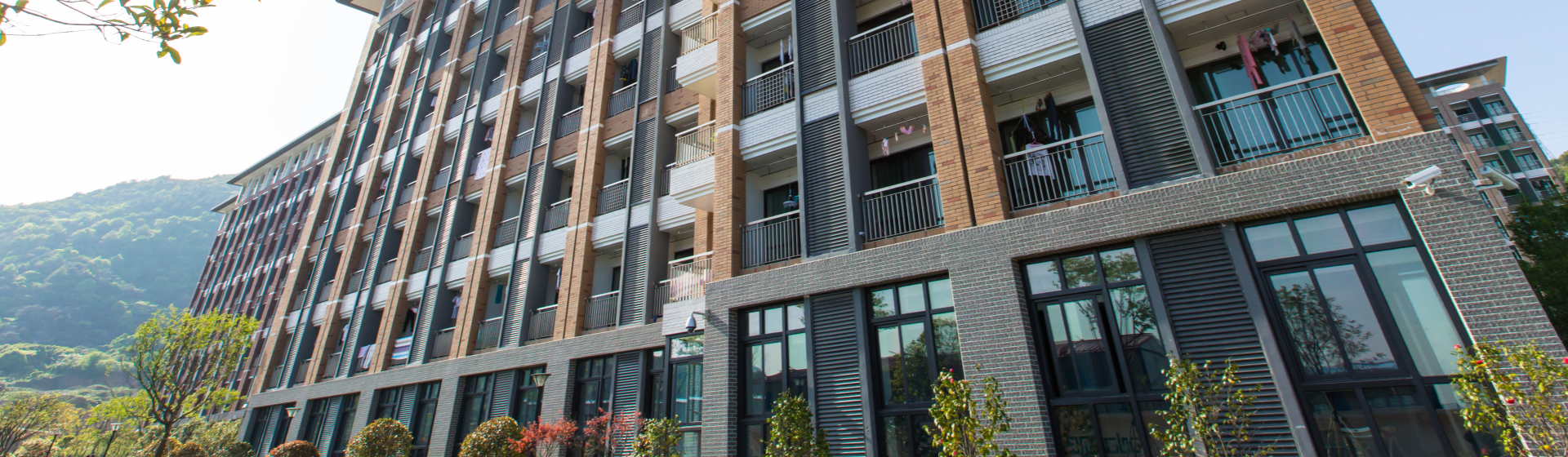
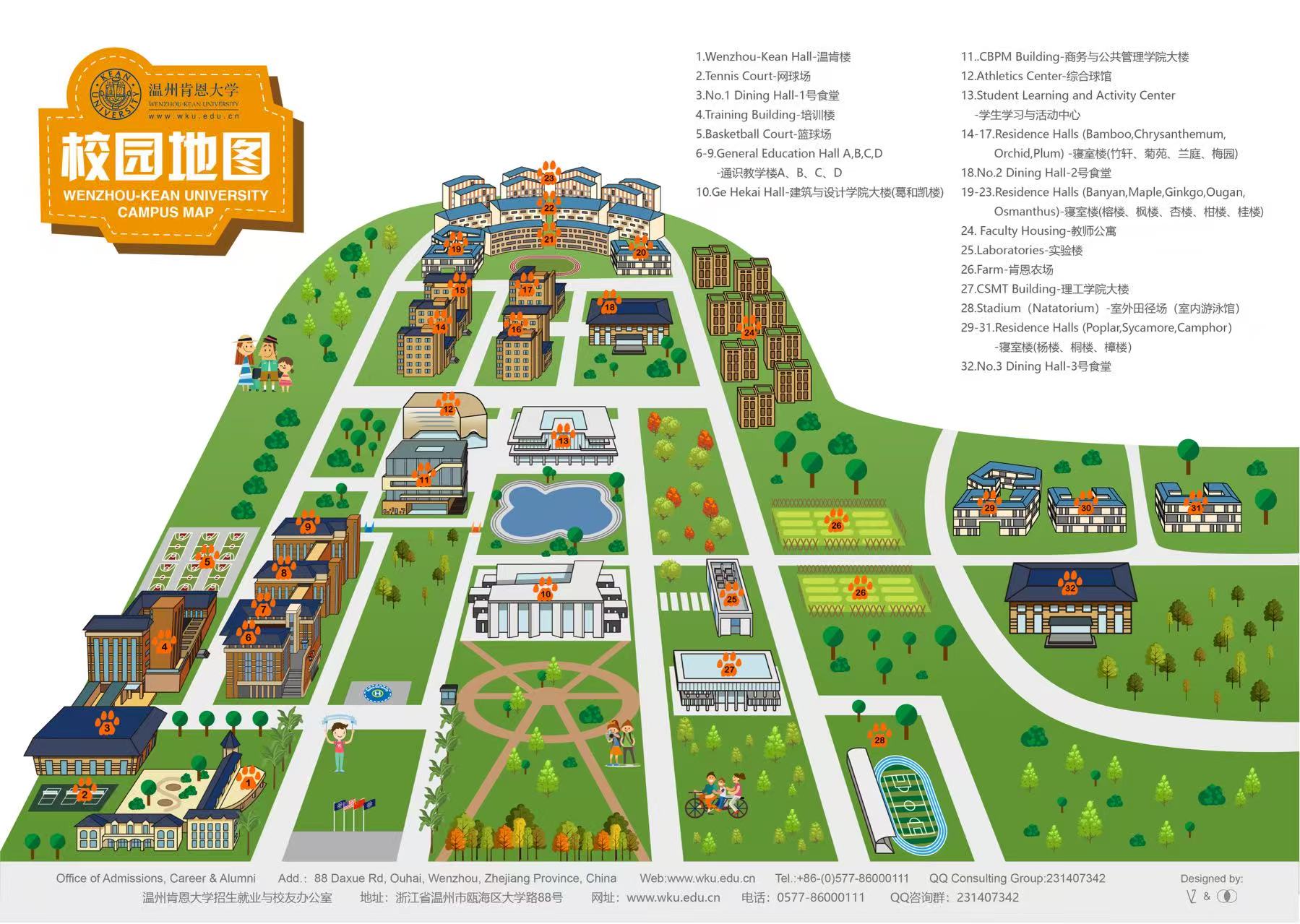
WKU is located in Li’ao township of Wenzhou, a scenic area known for its overseas Chinese heritage. The campus has a planned area of 3,000 mu (approximately 200 hectares). Its architectural design combines a traditional Chinese layout with Western-style architecture, creating a campus that brings Chinese and American cultures together in an eco-friendly, intelligent, and open environment. To date, Phase I of the campus has been completed, with approximately 360,000 square meters of buildings and facilities in place to meet the University’s educational and teaching needs. Construction of Phase II is progressing well. Phase III of the student residence halls has already been put into use, while Phase II of the faculty housing is expected to be completed and put into use in 2027. An international, modern, and open university campus is now taking shape. By bringing together Chinese and American educational traditions, the University has created a campus where Wenzhou’s scenic mountains and waters blend with American cultural elements. The campus development project has been included in the list of major projects for the integrated development of the Yangtze-River Delta. The campus has also been named as one of Wenzhou’s Top Ten Landmark Projects, selected for the Centenary Celebration Showcase, and highlighted as a model Sponge City Project. In recent years, its architecture has received a series of internationally renowned awards, including the Chicago Atheneum and European Center International Architecture Award as well as recognition as one of the six most beautiful campuses in the world in the 2024 Prix Versailles awards.
WKU will continue to accelerate its development into an international, innovative, and high-level Sino-foreign cooperative university, striving to become a model of Sino-foreign cooperative university, a bridge for people-to-people and cultural exchange, a cradle for cultivating internationally minded talent, and an exemplar of service to local development.
Last modified time: October 2026
Mission
Wenzhou-Kean University is a shining example of the mutual cooperation between the United States and China in higher education. As a center for fostering cultural exchange between China and the United States, the mission of this university is based on two primary principles of access and excellence.
The access component of this mission is to provide an opportunity to students in China from many different provinces to receive international higher education in an English-speaking university in China. Access also means that students from all over the world, especially the United States, have the opportunity to study in China using an international curriculum and meeting the guidelines of the accreditation agencies that accredit Kean University in USA and its programs in Wenzhou, China.
The excellence component of this mission is to provide world-class education, with world-class programs, taught by world-class faculty in world-class facilities in Wenzhou, China.
Vision
Our vision for excellence is built upon the three primary principles of excellence in curriculum, excellence in pedagogy and excellence in research that are needed to allow our students to succeed beyond their expectations and realize their higher education dream.